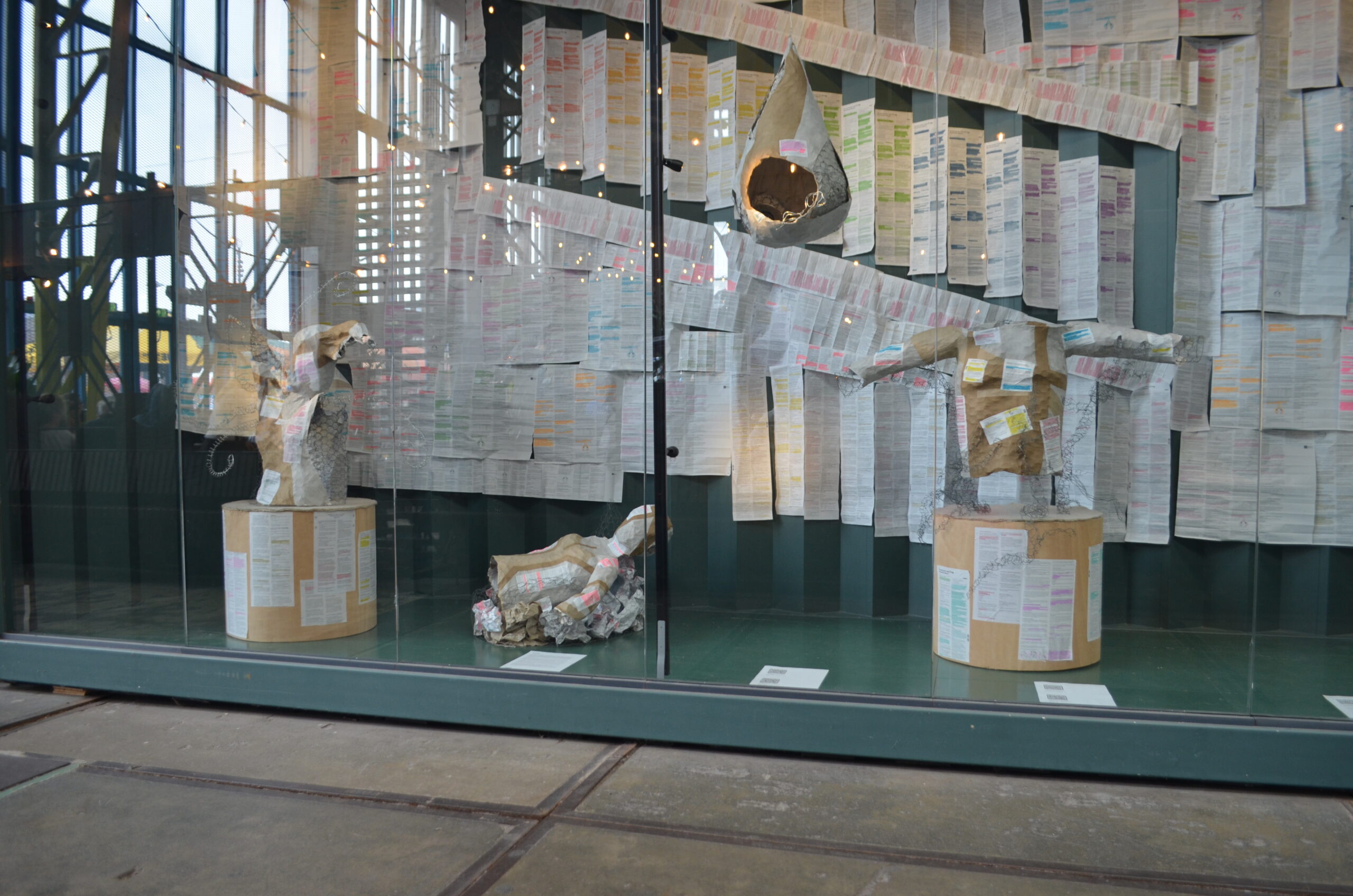
‘Hormone-all’ 2026 (timeline)
Five sculptures and five audio works tell stories of Gender Affirming Hormone Therapy through the experiences of trans people themselves. After all, the patient information leaflet that comes with the hormones is written…for cis people. So how do you know what to expect when you start GAHT? The installation promotes information about getting GAHT through the general practitioner, something that is a legal option in The Netherlands. However, this information is not widespread and GPs feel they lack knowledge to provide this care.
The sculptures stand before a background of patient information leaflets, that are marked for all the text that is not applicable to our trans bodies. The sculptures have been made with reclaimed material and ‘second hand care’: chicken wire, packing paper, and old books. The structures are open and have an unfinished look.
The audio tells the stories of the five people who inspired the sculptures, their voices are accompanied by improvised flowing sound compositions.
This project is funded by the Amsterdamse Fonds voor de Kunsten and the municipality of Amsterdam – Noordmakers. Trans in eigen Hand provides the information about GATH via the GP.
‘Missing’ 2025 (with Imke Hullmann)
This installation traces temporary marks of newly developed neighborhoods in Amsterdam. A glass print of a cut elm in Amsterdam Noord is paired with a projection of Strandeiland in the east of Amsterdam: showing a window of this artificial island. The installation is accompanied by a video & audio work that encourages visitors to recognize their non-human neighbors in the city. The work invites viewers to reflect on their dependency on place and the tension between life promised by urban development and life lost in the process. Accompanying the installation, a self-led walking tour connects the audience with local (non-human) lives that are or once were present at the NDSM wharf.
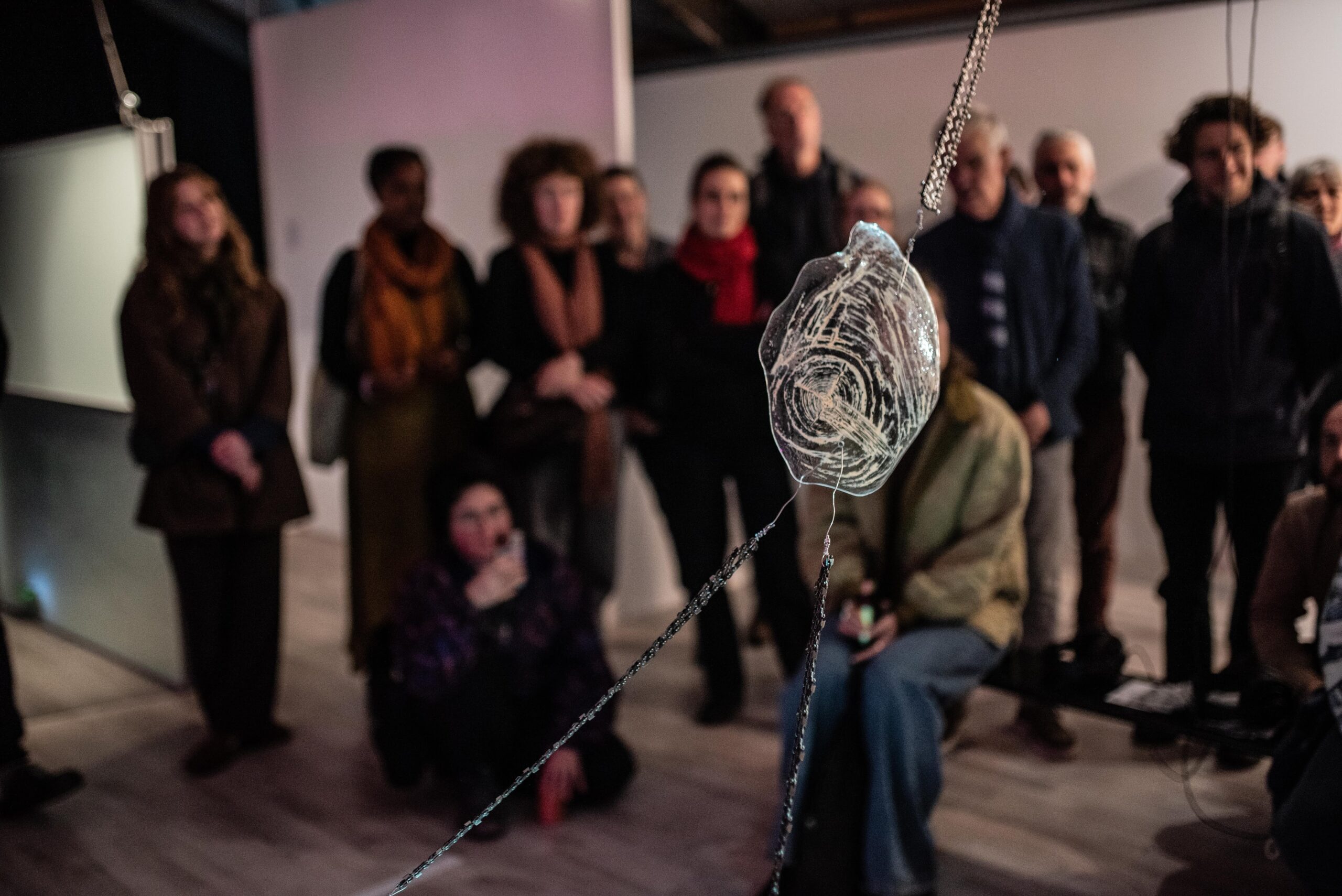
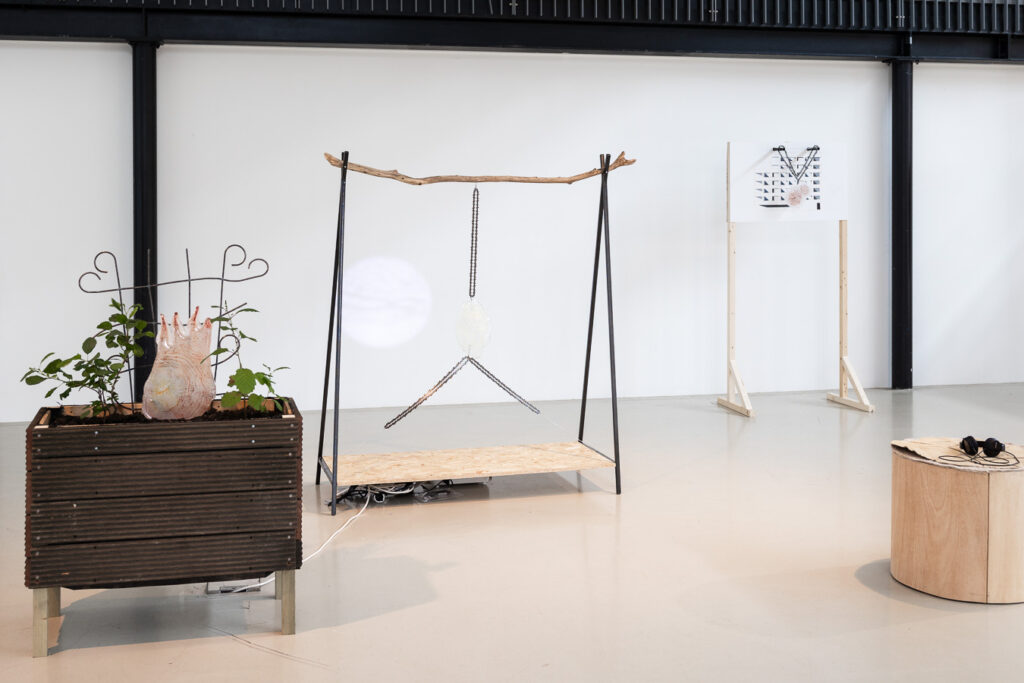
‘Aangeharkt’ 2025
Three glass prints of cut tree trunks hang or stand in the midst of seemingly more daily objects, a clothes rack, a plant pot, a building’s design. They are held by the municipality chainsaw chains that cut them down. A projection of the shadow of one of them slowly revolves on the wall. It is unclear where the light source is coming from or how the shadow can revolve when the actual object is hanging still. The materials that have replaced the trees now hold them. Two seats provide a resting place for headphones through which audio is playing.The tops are fragile ceramic prints of yet another two cut tree trunks. The audio speaks of the barriers that continue to enclose citizen agency over common green spaces, and the individual histories of these trees.
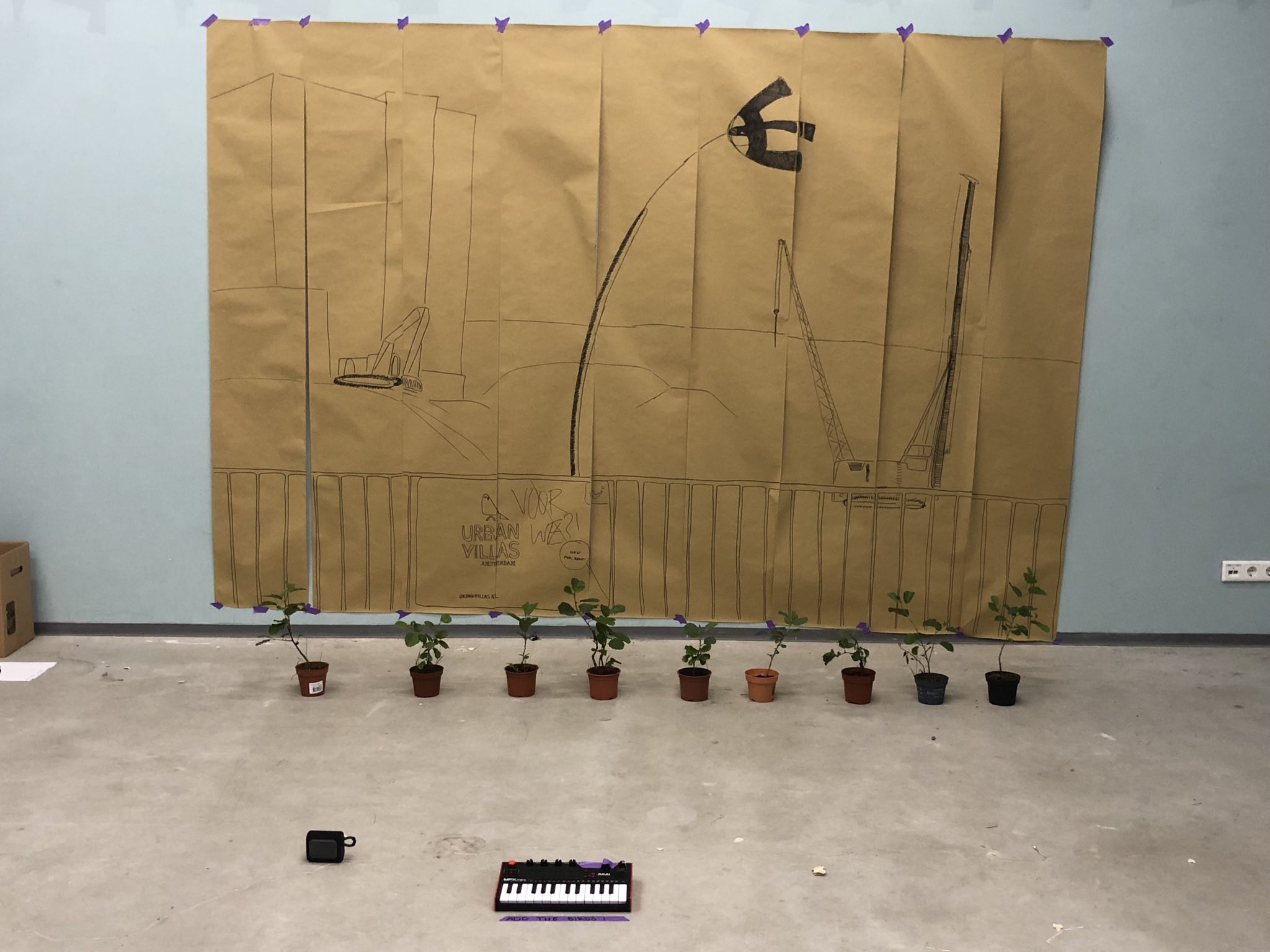
‘An elder for an alder’ (performative installation 2024)
This work is the result of an artistic research into the history and present of the neighbourhood-in-development of Elzenhagen-Zuid, Amsterdam-Noord. More than 2000 trees were cut in order to make the plot ready for the development of ‘Urban Villas’ in ‘the garden of Amsterdam’.
The soundwork explores the history of the alder tree (els), its role in the history of enclosures and capitalism, its use for gunpowder in the history of colonialism, and its classification in biology. This history is interwoven with the artist’s own relationship with trees, their involvement in local action groups to preserve the green spaces in Amsterdam, and questions around neighbourship, non-human lives in an era where climate justice is needed, and the role of policy and legislation representatives.
The desolate landscape of Elzenhagen-Zuid is slowly unfolded by the artist while the soundwork plays, and nine young alder trees are put in a row (hedge) in front of the neighbourhood desert, at the same time criticizing the lack of green, mourning the loss of the trees, providing the sand with new live, and showing the vulnerability of a tree, especially when individualised in pots, without the option to connect through rhizomatic structures. The separated trees also critique individual and separated capitalist life.
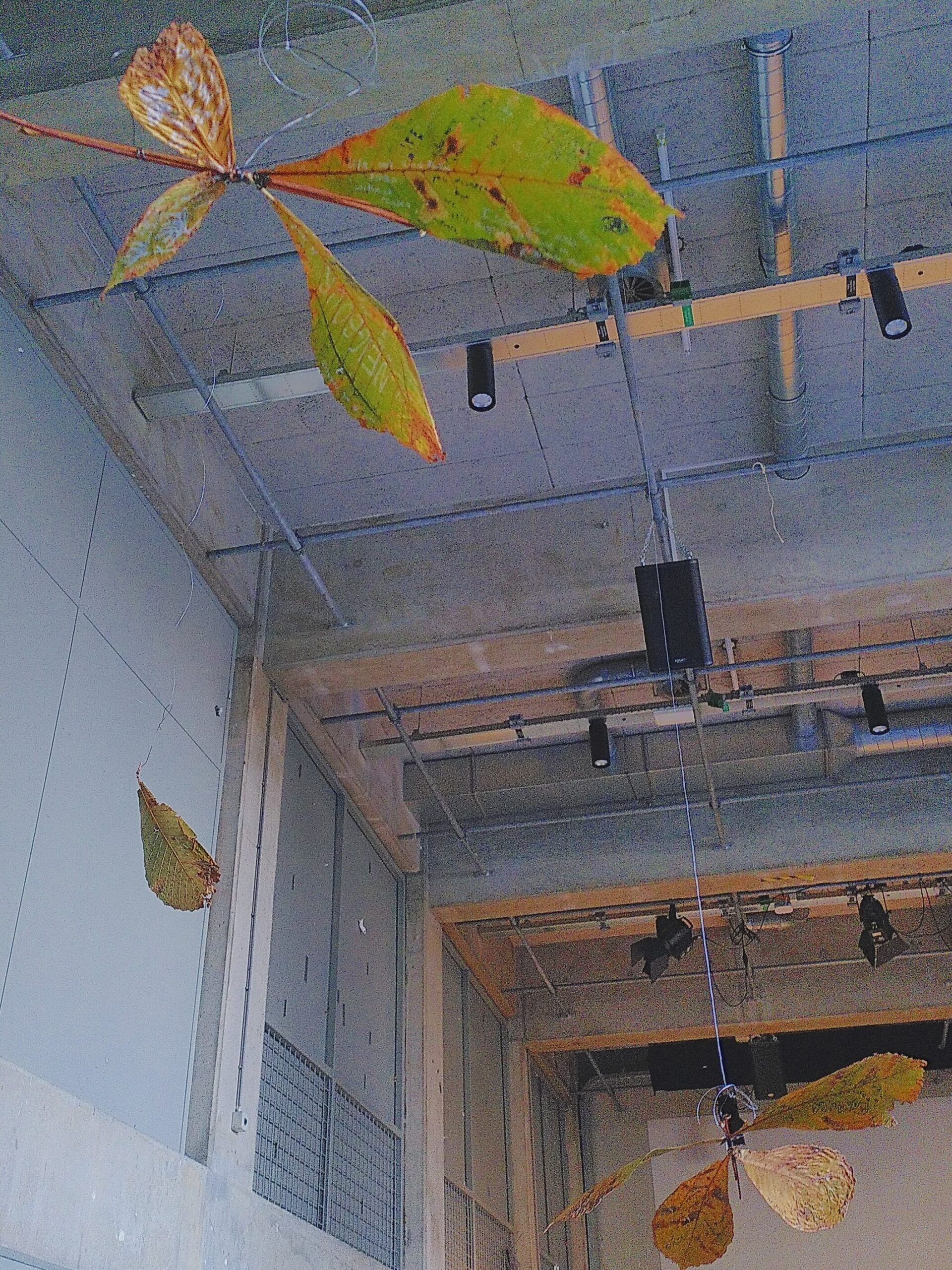
‘Leaf-left’ (2024)
This work seeks to broaden the question of climate justice to non-human species, to disrupt specieist hierarchies and determinators of ‘functionality’, and to imagine a way in which to live in a city where the human is not the determing factor for the shaping of the environment.
The work is an installation consisting of two butterflies commemorating trees that were cut down in the neighbourhood. They are made of dried chestnut leaves A soundwork accompanies the installation.